Cafeterias and quick service restaurants are quite popular around hospitals for the quick refueling of doctors, nurses, patients and visitors. Likewise, I visited the ‘Red Fox’ cafeteria near Metropolitan hospital in Faliro to have a coffee. Together with my cappuccino, I was offered a 500ml bottle of water to accompany my beverage. The label immediately attracted my attention as the branding of the Red Fox cafeteria was prominent, with the logo of Nera Kritis (the producer) clearly playing a secondary role. Before jumping into conclusions, let’s examine this practice taking a separate look from 3 different angles:
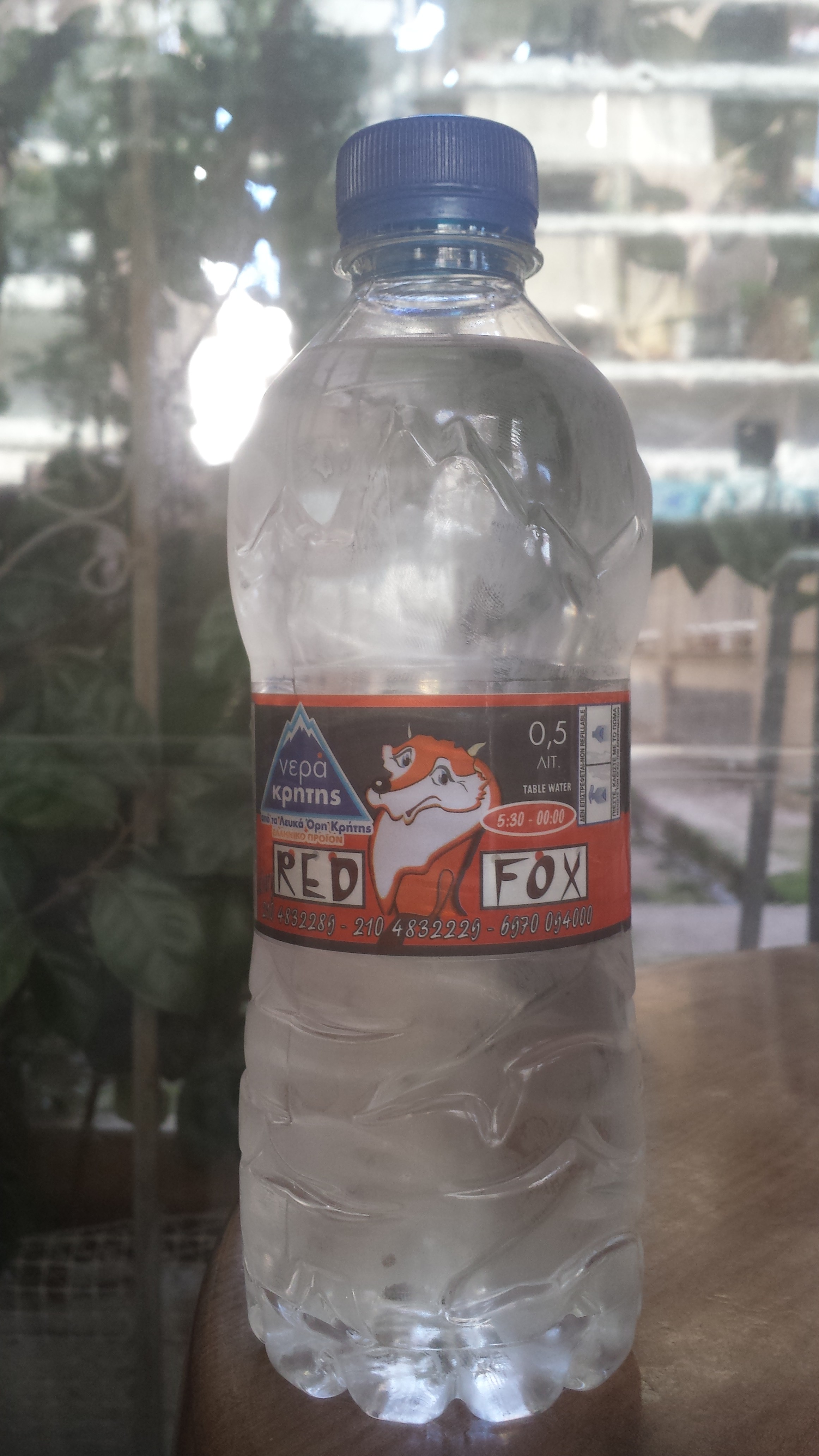
As a Customer (Red Fox): a nice to have extra branding on a bottled water label. In general F&B customers love seeing their brand in merchandise, consumables, gifts and products. From McDonald’s to the smallest cafeteria, customers feel flattered and significant when they experience exclusivity. Bonus for the case of Red Fox: the inclusion of their phone number on the label which serves as a good reminder/cheat-sheet to receive “delivery orders” from hospital rooms and hence increase their sales. Pretty good deal for them!
Consumer thoughts: no great benefits or feelings. The branding execution of the label is poor, with the product and brand coming clearly second. While a big portion of water brands follow a “water source” imagery codes (like mountain sketches on the labels) and colors conveying purity (eg. light blue or green color), consumer in our case is faced with an “incompatible to the category” red color, a tiny mountain logo and generally speaking, a sloppy artwork. Nothing to crave for and definitely no image building for the brand with this pack. Running a brief search online can return excellent examples of cobranded products and claims (ie. Proudly bottled for Red Fox) that can add value to both counterparts.
From a Company (Nera Kritis) standpoint: brilliant commercial move. In a saturated price driven market of bottled waters in Greece, with valorization (ελληνικά: διατίμηση) in the waters price, Nera Kritis with no significant brand awareness, no huge economies of scale that drive COGS down and no superiority in the product itself (since this is not a mineral water but just a table water) took the courageous step to think value and not price. Following a customer-centric approach and bearing a production and logistics burden to proceed with small production runs and dedicated labels, they managed to deliver value at a low price to their small but “significant” customer and win at the point of sales.
Final thoughts:
Customers: don’t always ask for the lowest prices. Ask for solutions
Suppliers: don’t always need to provide the lowest prices. Provide solutions
For the commercial people out there: it’s always right to go after sales revenue. However the only way for sustainable growth is building your brand and creating value not only for your customers (as customers come and go) but most importantly for your brand!
 marketlikes