Marketers Strive for More

Those working in marketing are quite familiar with the relentless pursuit of market share, brand awareness, conversion rates, and the list of metrics goes on… Yet, amidst all of these metrics, there are some that are particularly interesting such as the race for claiming association with specific occasions, shapes or even colors.

Let me refer to some familiar examples: Consider the clash of brands competing for association with particular occasions. Kit-Kat claims the “break occasion,” while Coca-Cola stakes its claim on the “meals together occasion.” Then there’s the struggle for dominance in the realm of colors. Mondelez, with its iconic Milka brand, champions the color purple, while Reckitt Benckiser endeavors to be synonymous with pink with their Vanish brand. Lastly there is also the battle for recognition based on shapes. When one thinks of the egg shape, Kinder reigns supreme as the most closely associated brand.

So if you consider the Easter occasion, the imagery of eggs is top of mind… and the egg-shape is traditionally owned by Kinder. What would you do if you were Mondelez, and color purple is your strong asset?

This pursuit of association gave rise to a stroke of genius in packaging.

I noticed this ingenious packaging of Mondelez’s chocolate eggs breaking the clutter in shelves, simply by nesting their chocolate eggs in an iconic purple carton (yes the one that real chicken eggs are sold in). In one shot Mondelez asserted ownership over not just the color purple, but also the iconic egg shape and hence the Easter occasion itself. Great move!

Happy Easter to all the witty people out there!
Marketers Strive for More

Market a Solution, not a Product

How many times have you encountered that familiar phrase, only to find a rare gem of an example that truly brings it to life? Couple this with some skillful copywriting, and… voilà! You’ve got a compelling point of sales communication!

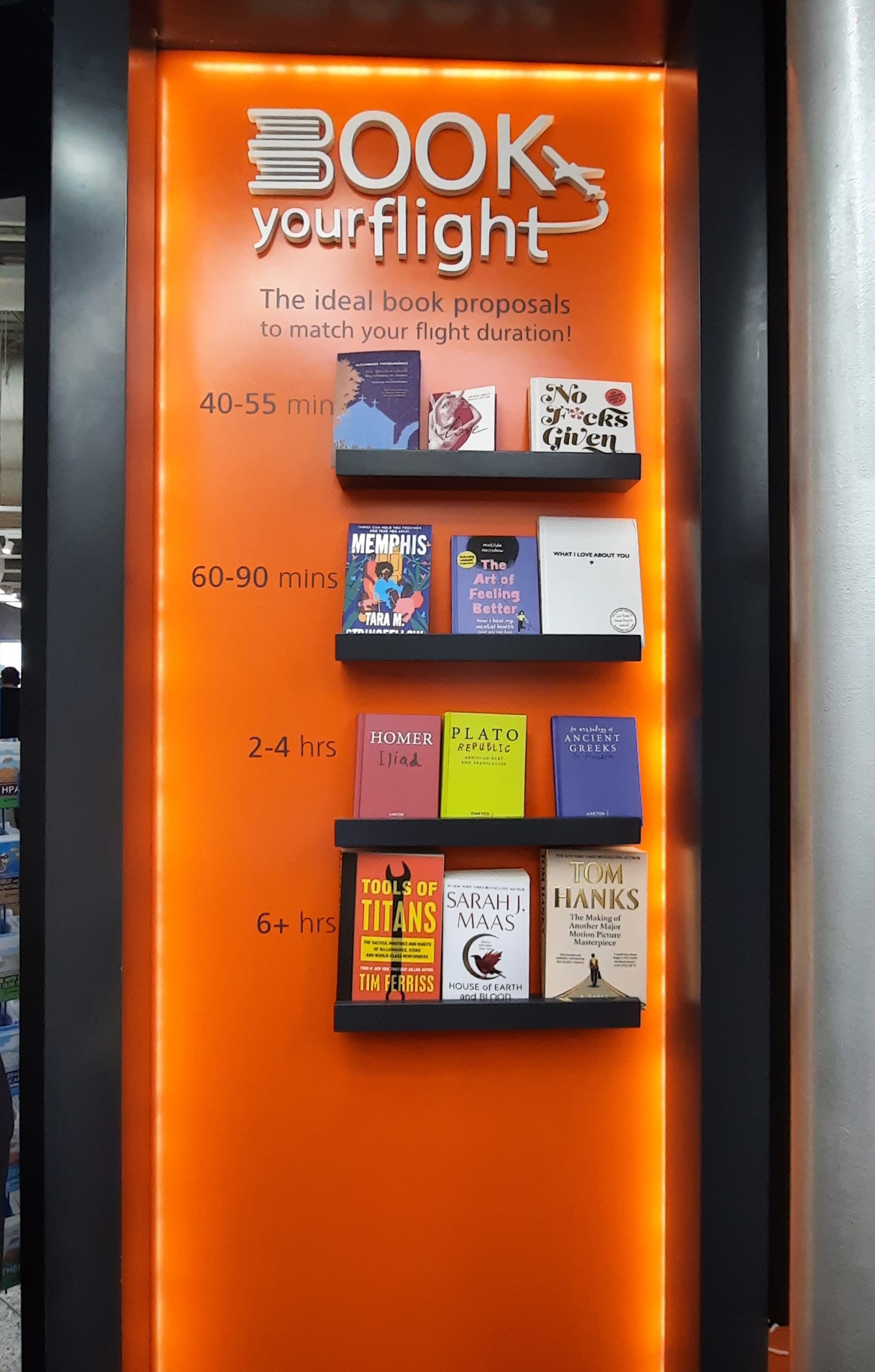
During a leisurely wait before my flight at Athens International Airport, I stumbled upon a clever bookshelf encouraging passengers to select a book based on their flight duration.

Next time you find yourself at the Greek capital’s airport, ensure you “book” your flight according to your anticipated time in the skies. As George R.R. Martin once eloquently expressed, “A reader lives a thousand lives before he dies… The man who never reads lives only one.”

Solution Marketing POS messaging @ Athens International Airport

Market a Solution, not a Product

A handmade brand story

What is the role of marketing claims when you are purchasing a product? Why are you buying one product vs. another at the decisive moment in front of the shelf?

Marketing claims are there to generate demand for a certain item (or service if you like). However, most importantly, brands would like to provide you with an emotional benefit (through a brand story) coupled with their product, in order to earn your preference. Handmade products are a special category in this, as they try to tell a unique story that’s also greatly connected to the person who actually made the product.

In this frame I particularly liked the below practice from Lush, a cosmetics manufacturer and retailer that make their products using only vegetarian or vegan recipes. I found out that 100% of their products are handmade by people who mix up fresh batches of materials everyday. I got a hold of a Lush product and the package looked quite ordinary at first. Nothing but the claim “handmade” on top of the pack to stress that this product was indeed handmade but… wait a minute… as soon as I flipped the cream container; I noticed a face sticker at the bottom of the package. This is the cartoon version of the person who actually made the product! His name is Dada (!) and his cartoon version looks a bit like me. What a fantastic twist having this kind of visual information on pack. Knowing who made the product and looking at the graphic version of his/her face, gives you a warm feeling and bonds you with the product. This practice conveys a unique story, as soon as this handmade product by a unique individual reaches your hands. In this “uniqueness relay”, the final receiver of the product cannot help but feeling unique and taken care of!

I’m closing with a quote from the company’s website, on why they insist on offering handmade products. This encapsulates their beliefs, constitutes a beautiful brand story and is indeed a very strong element of their USP. “This way, we can ensure that everything we use is of the highest quality and has been ethically sourced from beginning to end. Ever since our humble beginnings, handmade has been a part of our story. It’s not just part of our name; it’s part of who we are.”

Great stuff! What is your brand story that conveys your unique selling proposition?

A handmade brand story

A playful twist for a (previously) dull passage

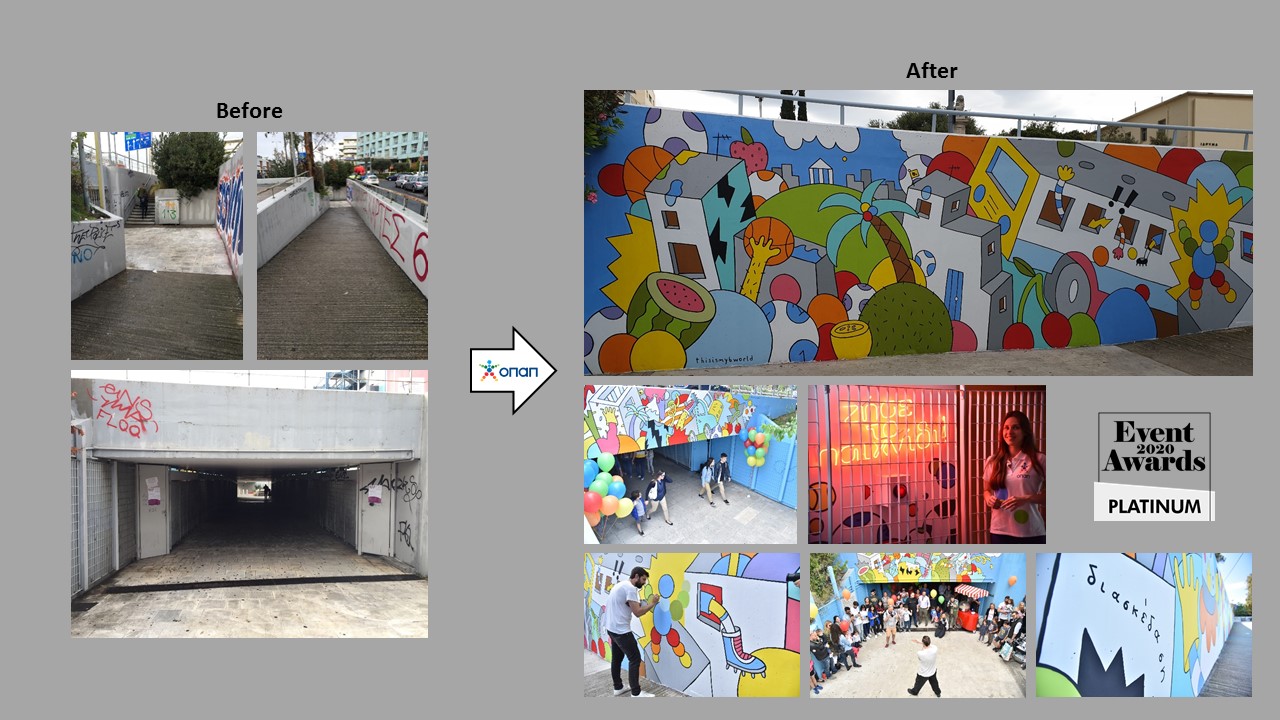
I’ve been writing my blog for 6 years and I have never praised projects that I have led (at least not until today). However, on November 2020 while Greece is experiencing the second phase of a lockdown, I had the honor to receive a Platinum distinction in the Event Awards 2020 organized by Boussias Communications for the project “The First Interactive Under Passage in Greece”. I felt that amidst these tough times, this is the right moment to write about this case and highlight the significance of brand experience as we navigate through Covid19. Let me break down for you, why I believe this is a particular good story to share.

In early 2019, I took the courage to propose to my manager an idea to revamp an underground passage in the city I grew up. Why does it take courage to propose something like this?  There are numerous reasons but let me provide my top 5: A. It needs a good amount budget B. You face the risk that the project gets vandalized C. Initiatives like this are often mistaken for CSR actions and not perceived as brand initiatives (ie. there is a weak brand role in the renovation) D. It is almost impossible to hit the right balance between a branded intervention (which also included a high risk of vandalism) and a restoration that cannot be attributed to a brand (ie. this is nice but we don’t know that OPAP did it) E. Collaborating with the Public Sector can be long and cumbersome. Even one single reason of these, could have discouraged us and force us abandon the idea.

Continue reading “A playful twist for a (previously) dull passage”
A playful twist for a (previously) dull passage

Hit while the iron is hot

Covid19 has a tremendous negative impact on the economy so far. However, as all wise people would argue, every coin has two sides. For financial services corporations like Visa, Covid19 has been a main driving force for even wider adoption of card payments and more specifically contactless payments. It seems that contactless payments are indeed on a sharp rise worldwide, especially during the last months. What should financial services companies offering contactless payments do in such an occasion? Should they lay back and enjoy the favorable side effect of a pandemic or ride the wave and try to establish both contactless payments as well as themselves as leaders in this field.

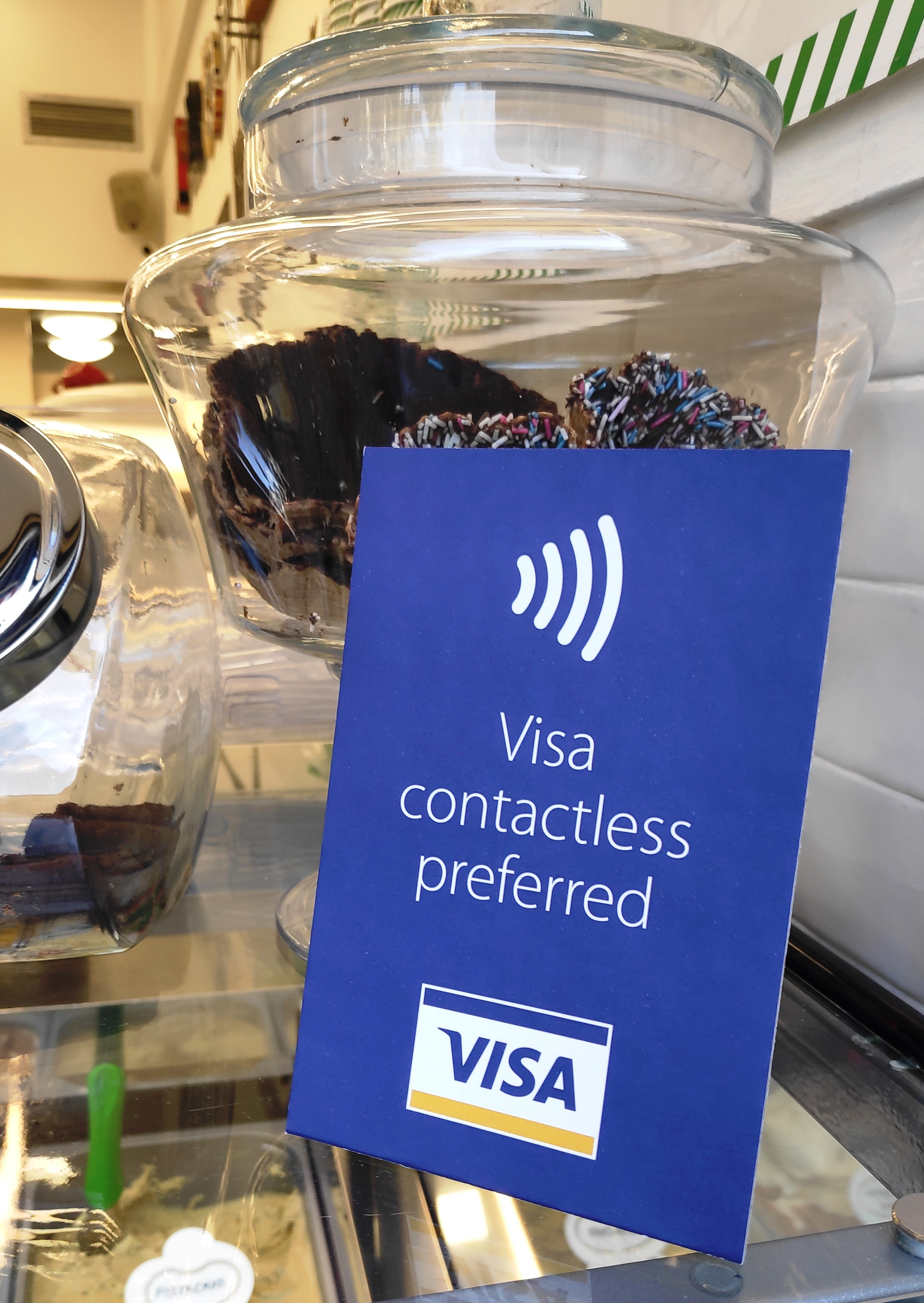
Visa decided to do the latter, and hit while the iron is hot. I noticed the below table tent in a gelateria in the center of Athens. I particularly enjoyed the straightforward messaging (Visa contactless preferred) as it was the shortest message possible, with the brand mentioned first and the word “preferred” serving as a nudge rather than an obligation or an option. The artwork was uncluttered and the placement of the table tent on top of the ice-cream vitrine could not be better. I paid using my contactless Visa.

Well played Visa, well played.

Visa Point of Purchase advertising material

Hit while the iron is hot

On Successful brand extensions

-Are all cookies yummy?

-Hell yeah!!!

-…and who thinks cookies are healthy?

-…(hesitation)

Well I guess very few can answer positively to the last one. One of the most difficult challenges for the food industry is to change unhealthy product category perceptions. Most companies subtract the “guilty” ingredients from products and offer a “light” version of them. In this manner, no sugar / low fat / no palm oil / … products emerge. Thus, products are healthier… but they are also perceived as far less indulgent (since you take something out of them)! Companies face a difficult trade off, as fixing one problem creates another one.

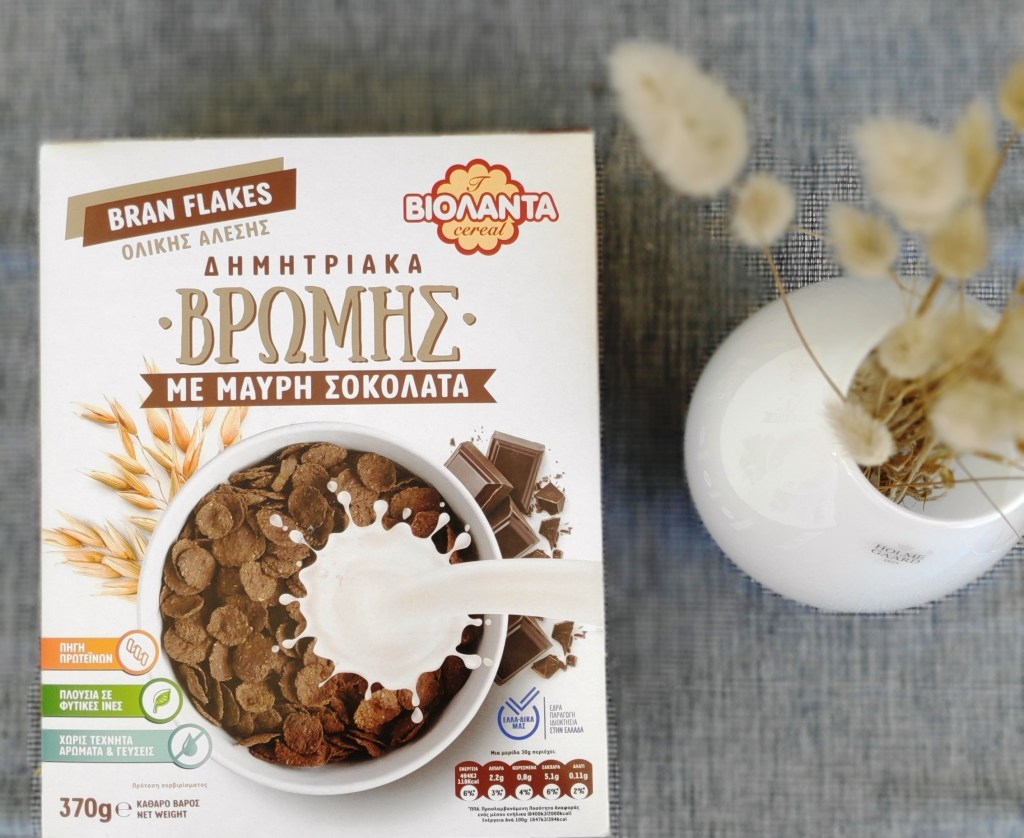
Violanta Cereals as brand extension

Cookie manufacturer Violanta, took another direction and instead of subtracting ingredients, they added healthy ones (like oats for example), thus solving the riddle of manufacturing cookies that are perceived both tasty and healthy.

I believe the practice of adding wellness ingredients in order not to compromise taste, has been the spearhead for the success of Violanta cookies during the last few years. Their practices also included clear packaging, the right amount of emphasis on “Greekness”, serious sales development efforts and distinctive merchandising material… but this is another topic.

Concisely, Violanta nailed it with their product development…

When a success with a product comes, management thinks on the next steps… and when it comes to next steps, going after a brand extension is a reasonable option.

Companies often try to “milk” their hero brands creating other product categories that fall under the hero brand umbrella. All of us have personal experiences with brand extensions that are very often unsuccessful. The reason for this is that companies fail in creating new consumer benefits. In such cases, where the new products do not bring enough meaningful value to the consumer, brand extensions feel more like brand stretches.

-How do breakfast cereals taste?

-Usually not great… but if my cereals taste like yummy healthy cookies then they must be tasting great too.

Violanta recently launched a line of breakfast series taking advantage of the strong equity built in their healthy and great tasting cookies. Their breakfast cereals brand extension, does bring a significant value (that of indulgence) in a category which is already established as “good for you” in the consumers’ minds. All cereals are healthy, but not all taste great. Violanta borrow one category’s values to the other, reap the benefits of the halo effect between the two categories, and are ready to cash out while competing in the tough breakfast cereals category.

On Successful brand extensions

Towards a more sustainable and affordable future

Every time I unwrap a luxury item (actually not very often) the amount of packaging waste really blows my mind. The higher the price/volume ratio for a product, the more the packaging waste…

Speaking of this, while shopping in a personal care and beauty shop, I noticed the below “fountain” device from Mugler Fragrances where customers can refill their favorite perfume. It immediately stroke my sensitive ecology chord…

Photo: Mugler Source

A bit of background to the story… as I later read, Mugler perfumes Angel and Alien have been around for quite some time, with Angel launching back in 1992 (yes that is prior to the millennium!!!). It is considered an iconic fragrance as at it was the first “gourmand” fragrance (= a perfume consisting primarily of synthetic edible/gourmand notes, such as honey, chocolate etc.) that shocked the perfume industry with this innovation. Current annual sales estimates of Angel along with its companion scent Alien account for approximately €250 million!

I asked the salesperson about the price difference between purchasing a 50ml bottle or refilling one. The answer came as a surprise to me. Purchasing a bottle would cost ~€73 while refilling one would cost ~€39 (both options were on discount at that moment). This is a great deal of saving for either a loyal customer or a younger, cost conscious person who is relative new to the franchise.

Could it be that solutions like the above, hit two birds with one stone? On one hand with such small actions, Mugler Fragrances show that they care about the environment and on the other hand, that they provide to their customers a more cost efficient way to enjoy the brand (and finally stay in the Mugler franchise).

On a closing note, one thing is certain to me… it takes more than offering a great, even breakthrough at a time, perfume to stay relevant for 28 consecutive years.

Towards a more sustainable and affordable future

Product Experience in a NON Digital World

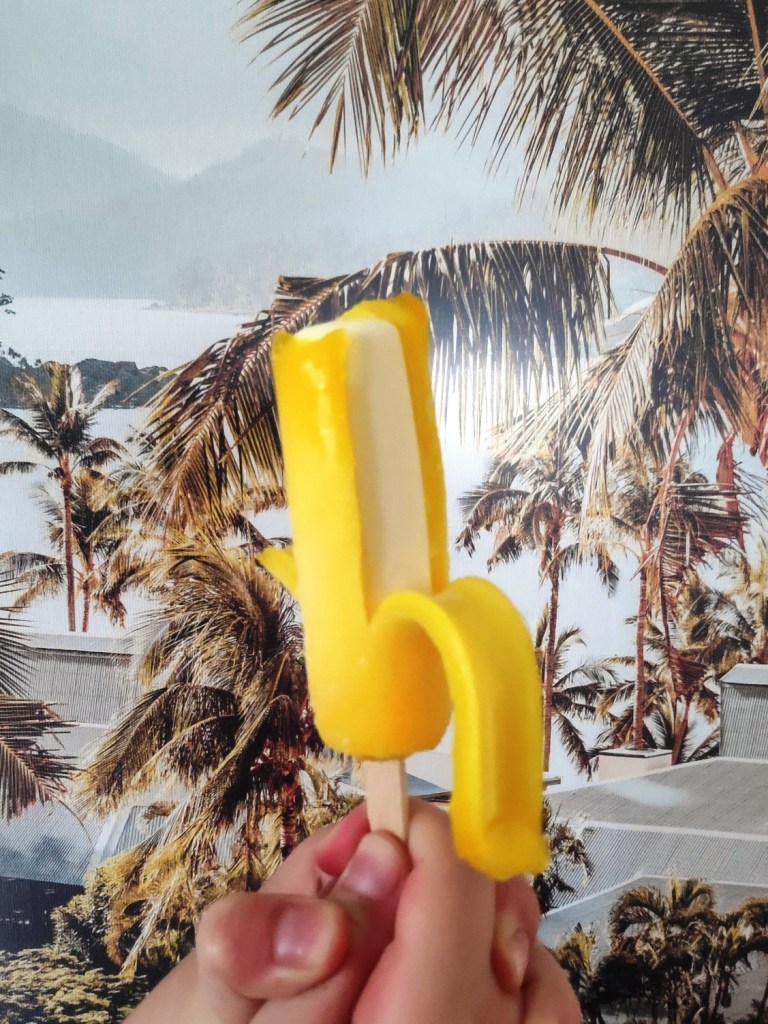
Much ink has been spilled over the term product experience when it comes to apps, high tech gadgets, mobile phones or automobiles. Marketers and product managers try to create this extra value of a product or service in order to shift positively customer perceptions as they use the products in order to get ahead of the competition. Customization, personalization, intuitive user interface, human centric design, usability etc. are coming first in mind to the makers of services and high-end products. But what does it take to create a unique product experience when it comes to a relatively simple category like ice-cream?

Nestle Pirulo Jungly – engaging product experience

Well Nestle with Pirulo Jungly had a blast on me, when I watched my son literally peeling a banana shaped ice-cream in the same way he would have done with an actual banana. An amazing sensory design hack, which made the product experience unique for a young kid. It’s easy to debate for hours on worth mentioning examples of successful product experiences in complicated products or services, but having such unique product experiences in the ice-cream product category is pure genius.

Any other example of a unique product experience when you least expect it?

Product Experience in a NON Digital World

On Naming Your (Soap) Product

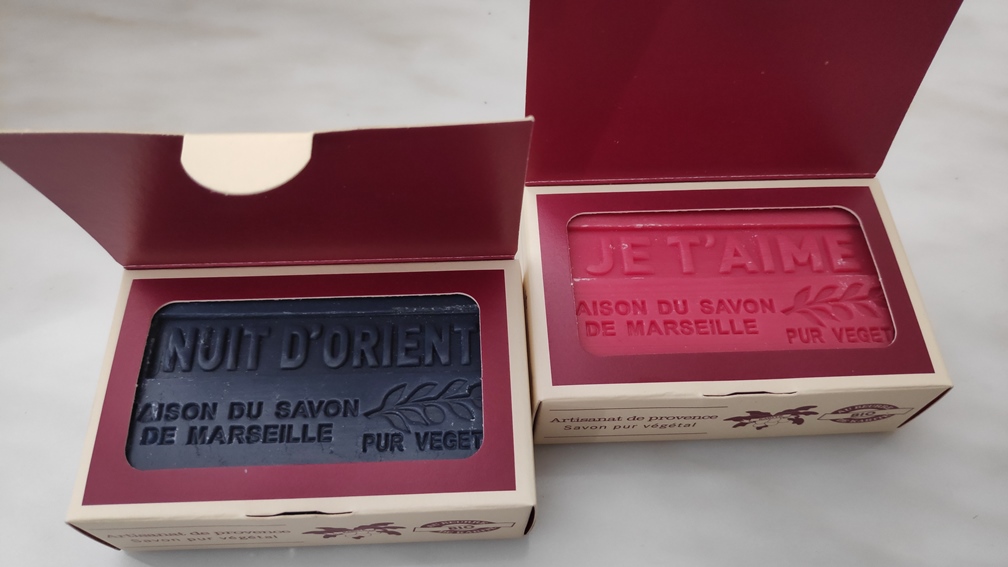
Nowadays, following the outbreak of the Covid-19 virus, we wash our hands several times a day. Since I was looking for a milder alternative for washing my hands, I drew some Marseilles soap bars from the cupboard, which I had purchased from France some time ago.

Marseilles_Soap_Bars

While smelling their scent for picking one of them, I noticed that the names were not descriptive but rather conceptual: Je t’aime, Masculine, Nuit d’Orient.

Amidst negative news on the virus, even while just reading the soap names, I experienced for an instance a warm feeling. I believe it is a great idea, to tie your product name with the feeling you want people to have when using it. Product names should indeed create positive associations and evoke an emotion. Naming your product in the right way, can build a story that affects how customers perceive the value of it.

Stay home, stay safe, stay calm and wash your hands.

On Naming Your (Soap) Product