How many times have you encountered that familiar phrase, only to find a rare gem of an example that truly brings it to life? Couple this with some skillful copywriting, and… voilà! You’ve got a compelling point of sales communication!
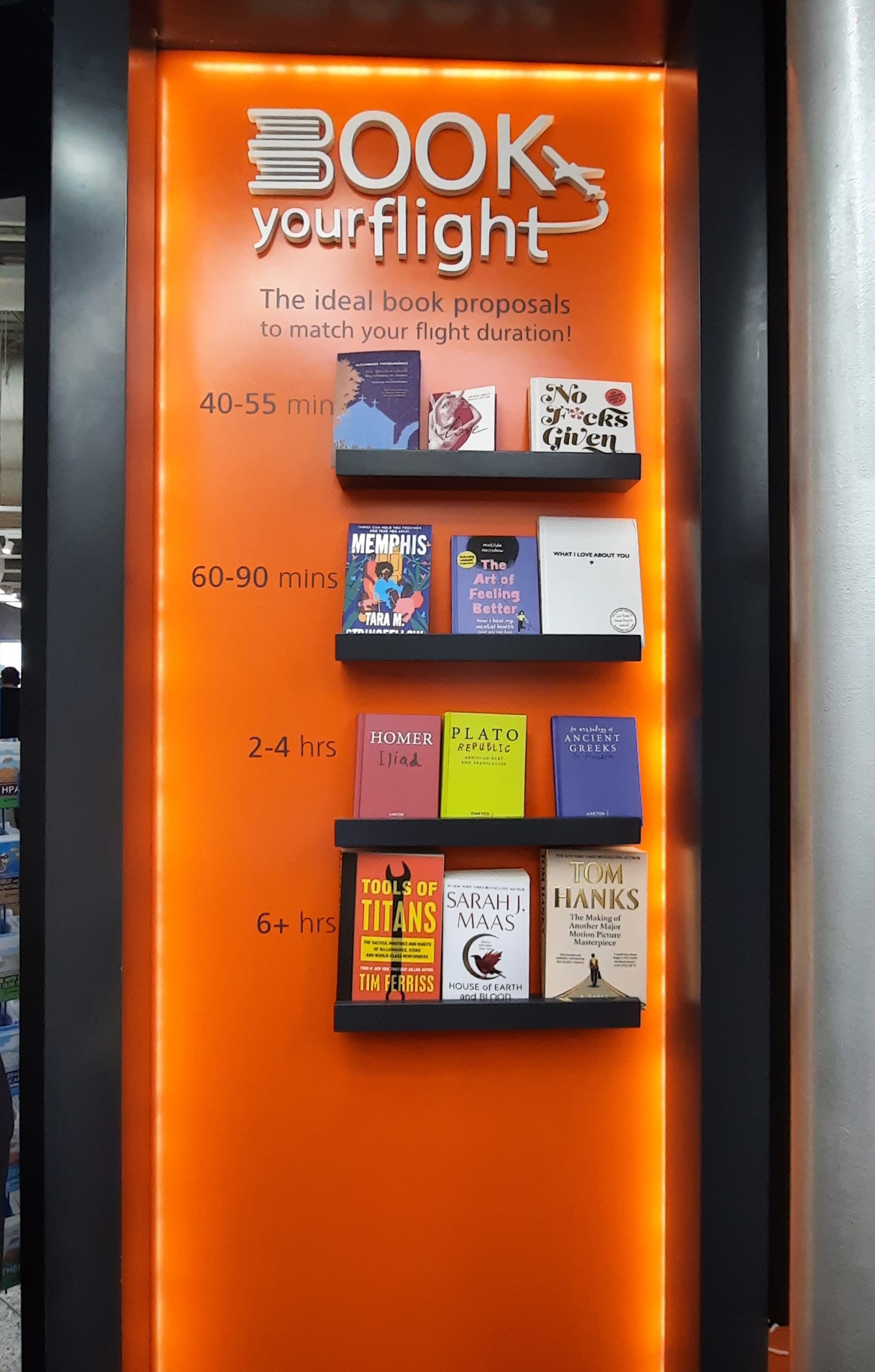
During a leisurely wait before my flight at Athens International Airport, I stumbled upon a clever bookshelf encouraging passengers to select a book based on their flight duration.
Next time you find yourself at the Greek capital’s airport, ensure you “book” your flight according to your anticipated time in the skies. As George R.R. Martin once eloquently expressed, “A reader lives a thousand lives before he dies… The man who never reads lives only one.”
Solution Marketing POS messaging @ Athens International Airport
As I was running around my neighborhood, I noticed the below sign in one of the house construction sites along my route. It drew my attention, as it was a clear warning label for keeping safety precautions while on site. One would argue “What’s the great deal about it?” and I may agree to a point until I realized that this communication is checking two very important boxes
It serves a great purpose, that is of work safety in a clear, illustrative way
It communicates the company group’s name, the company and also a brand motto (which is so cool for a cement company as it translates “relationship on solid foundation”)
Building further on the second point, this leadership practice of placing such signage is ultimately showing respect and professionalism and could be translated multifacetedly as taken by various stakeholders. The constructor (B2B client) is happy with a useful piece of communication material that upgrades his image while keeping him compliant with H&S rules, the potential B2C customer translates this as a responsible practice which may affect positively his preference when buying a B2C product from the company (eg. for DYI use), a business professional may consider the company for employment, a prospect investor may consider purchasing company’s stock (even though Lafarge’s stock has stopped trading in the Athens Stock Exchange for some time)… and the list goes on.
Some may find “Everything Communicates” a cliché, I find this a perennial universal truth.
What is the role of marketing claims when you are purchasing a product? Why are you buying one product vs. another at the decisive moment in front of the shelf?
Marketing claims are there to generate demand for a certain item (or service if you like). However, most importantly, brands would like to provide you with an emotional benefit (through a brand story) coupled with their product, in order to earn your preference. Handmade products are a special category in this, as they try to tell a unique story that’s also greatly connected to the person who actually made the product.
In this frame I particularly liked the below practice from Lush, a cosmetics manufacturer and retailer that make their products using only vegetarian or vegan recipes. I found out that 100% of their products are handmade by people who mix up fresh batches of materials everyday. I got a hold of a Lush product and the package looked quite ordinary at first. Nothing but the claim “handmade” on top of the pack to stress that this product was indeed handmade but… wait a minute… as soon as I flipped the cream container; I noticed a face sticker at the bottom of the package. This is the cartoon version of the person who actually made the product! His name is Dada (!) and his cartoon version looks a bit like me. What a fantastic twist having this kind of visual information on pack. Knowing who made the product and looking at the graphic version of his/her face, gives you a warm feeling and bonds you with the product. This practice conveys a unique story, as soon as this handmade product by a unique individual reaches your hands. In this “uniqueness relay”, the final receiver of the product cannot help but feeling unique and taken care of!
I’m closing with a quote from the company’s website, on why they insist on offering handmade products. This encapsulates their beliefs, constitutes a beautiful brand story and is indeed a very strong element of their USP. “This way, we can ensure that everything we use is of the highest quality and has been ethically sourced from beginning to end. Ever since our humble beginnings, handmade has been a part of our story. It’s not just part of our name; it’s part of who we are.”
Great stuff! What is your brand story that conveys your unique selling proposition?
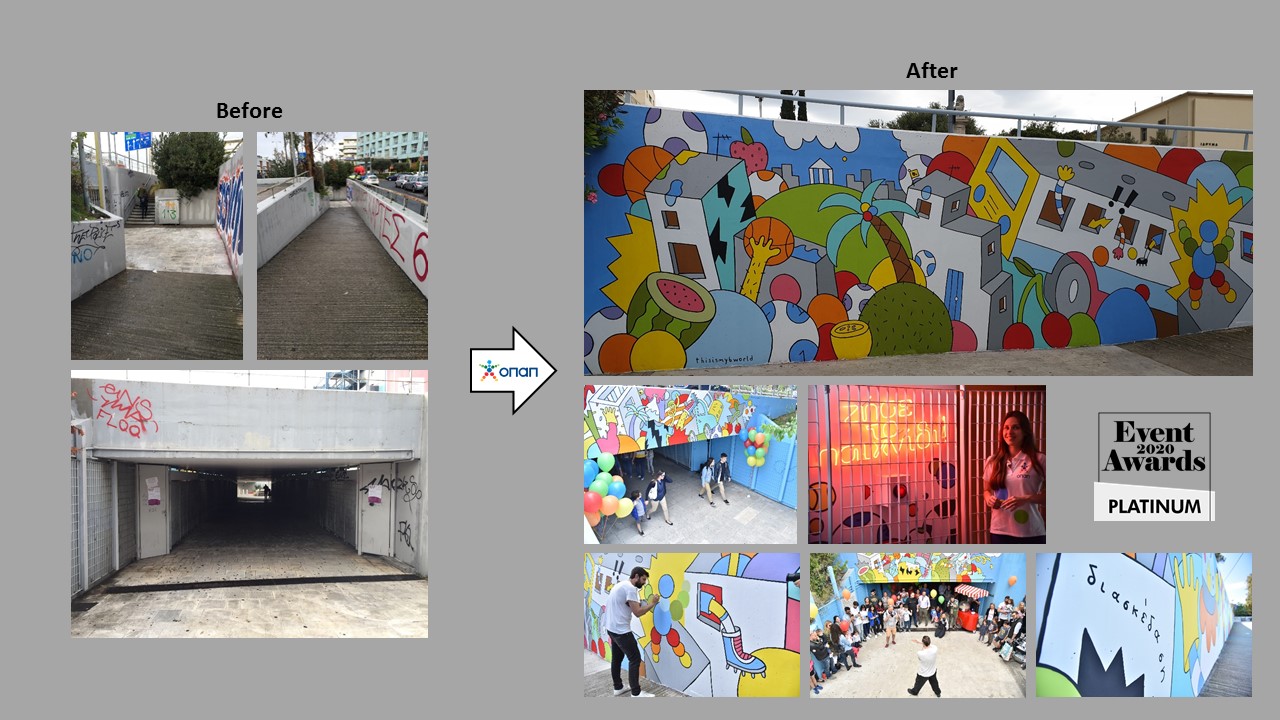
I’ve been writing my blog for 6 years and I have never praised projects that I have led (at least not until today). However, on November 2020 while Greece is experiencing the second phase of a lockdown, I had the honor to receive a Platinum distinction in the Event Awards 2020 organized by Boussias Communications for the project “The First Interactive Under Passage in Greece”. I felt that amidst these tough times, this is the right moment to write about this case and highlight the significance of brand experience as we navigate through Covid19. Let me break down for you, why I believe this is a particular good story to share.
In early 2019, I took the courage to propose to my manager an idea to revamp an underground passage in the city I grew up. Why does it take courage to propose something like this? There are numerous reasons but let me provide my top 5: A. It needs a good amount budget B. You face the risk that the project gets vandalized C. Initiatives like this are often mistaken for CSR actions and not perceived as brand initiatives (ie. there is a weak brand role in the renovation) D. It is almost impossible to hit the right balance between a branded intervention (which also included a high risk of vandalism) and a restoration that cannot be attributed to a brand (ie. this is nice but we don’t know that OPAP did it) E. Collaborating with the Public Sector can be long and cumbersome. Even one single reason of these, could have discouraged us and force us abandon the idea.
Covid19 has a tremendous negative impact on the economy so far. However, as all wise people would argue, every coin has two sides. For financial services corporations like Visa, Covid19 has been a main driving force for even wider adoption of card payments and more specifically contactless payments. It seems that contactless payments are indeed on a sharp rise worldwide, especially during the last months. What should financial services companies offering contactless payments do in such an occasion? Should they lay back and enjoy the favorable side effect of a pandemic or ride the wave and try to establish both contactless payments as well as themselves as leaders in this field.
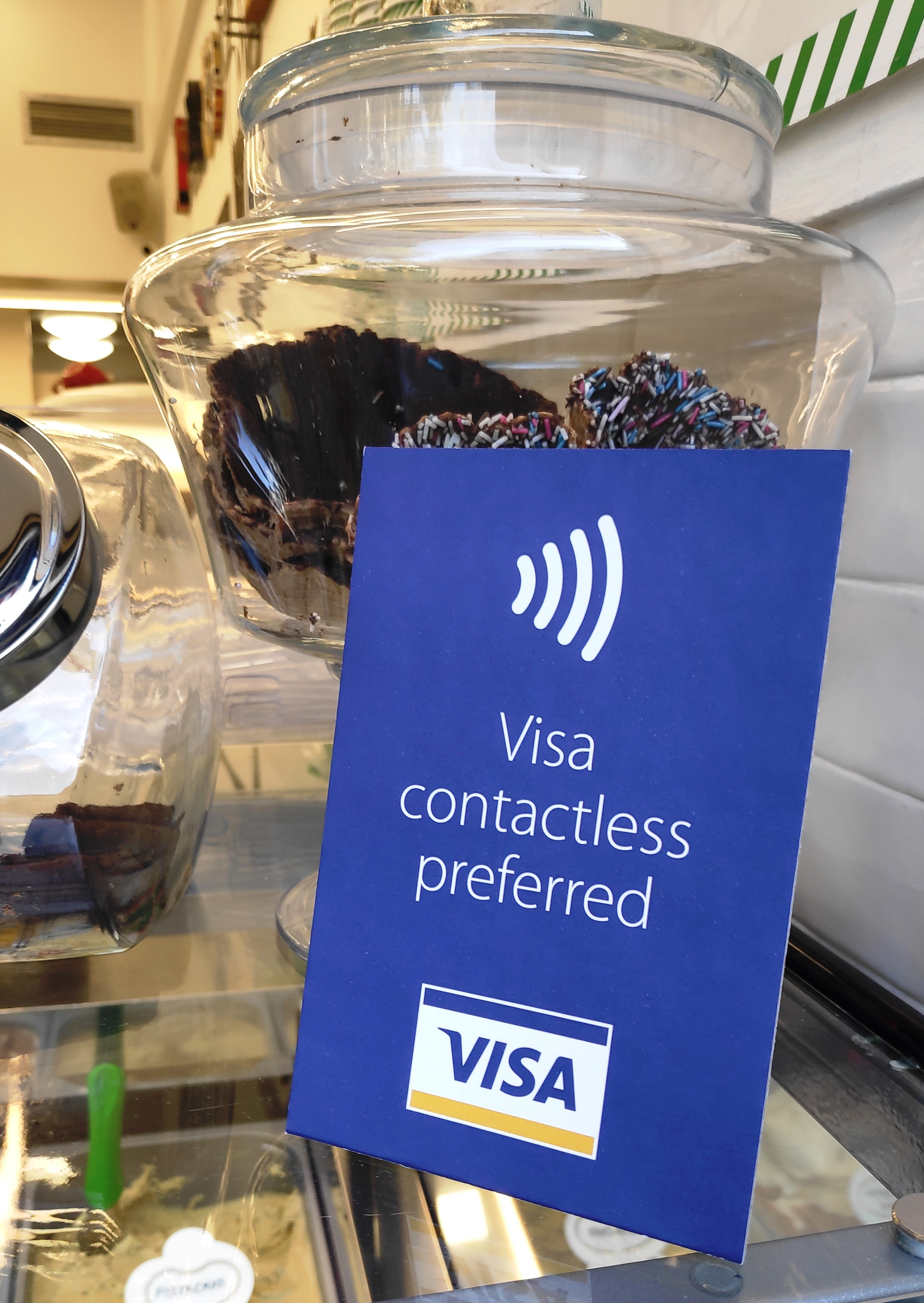
Visa decided to do the latter, and hit while the iron is hot. I noticed the below table tent in a gelateria in the center of Athens. I particularly enjoyed the straightforward messaging (Visa contactless preferred) as it was the shortest message possible, with the brand mentioned first and the word “preferred” serving as a nudge rather than an obligation or an option. The artwork was uncluttered and the placement of the table tent on top of the ice-cream vitrine could not be better. I paid using my contactless Visa.
During the last weeks, the need of masks to protect ourselves from Covid-19 has become immense. I needed to purchase some extra masks, and I did so from an e-shop of a manufacturing firm that favored high customer ratings. Just before completing my purchases, the website successfully proposed some nice looking pair of underwear; I liked them and added them to the basket. Being a man who appreciates experience, what I was experiencing so far in this digital shopping trip was seamless and up to my expectations. The following small twist in the final step before proceeding to check out, gave me an extra warm feeling just like a cherry on top of a cake.
The text next to a tick box read: No packaging: Choose not to include packaging for the underwear, so that packaging can be promptly recycled within our factory premises. Do it for a planet with less waste.
Some may think that this a camouflaged initiative that aims to avoid packaging cost and to result to lower shipment costs (due to smaller packaging volume). Others would even disagree with the practice and argue that the unboxing experience would be non-existent resulting to a poorer product experience right at its start. I would agree with both statements but let’s take a moment to pause and think it over.
Ticking a box to opt in during an online shopping trip, is a small manifestation of freedom of choice. A person who likes unboxing would not opt in while an eco-sensitive person would. To me, giving the power of choice to the Customer is synonymous to a feel-good gesture for him. I would also add that freedom of choice represents something more important than power; it represents the right of the individual to be a free agent in his relationships with other humans in the society, to choose his own course of action in order to make the right decisions to the benefit of the society. Thinking it over, this does not feel like a cheap trick, but it feels more like a small example of empowerment for a greater, sustainable future.
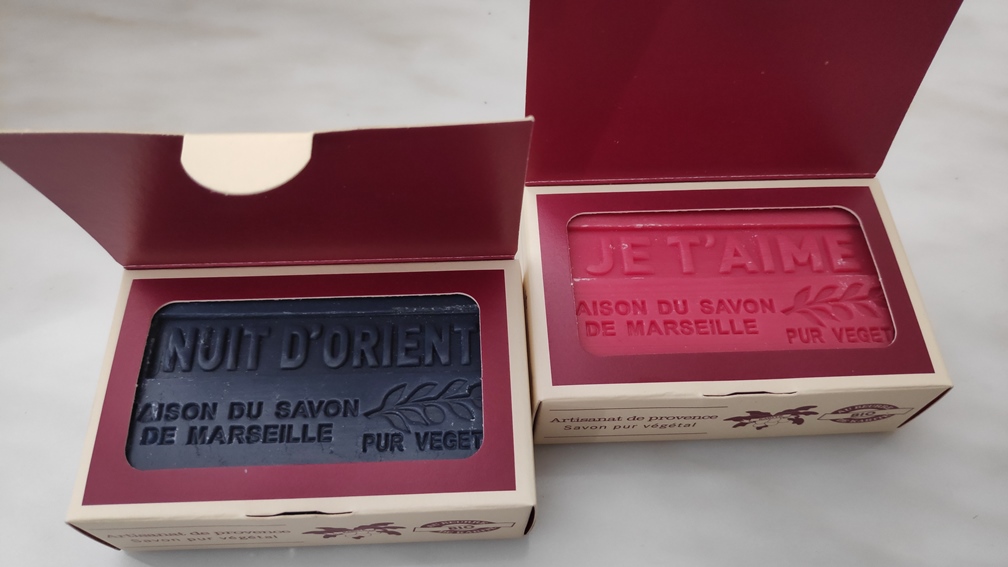
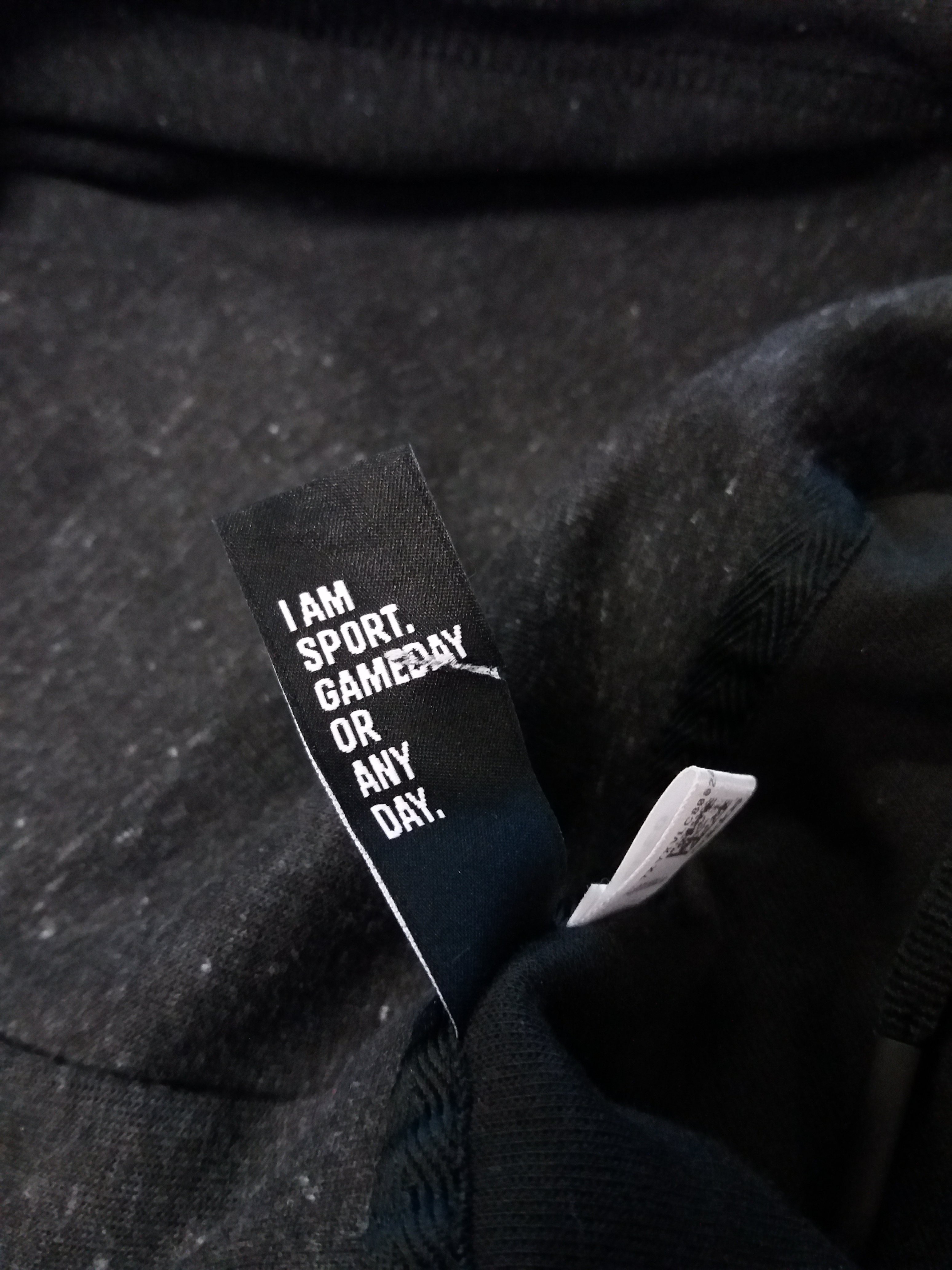
Nowadays, following the outbreak of the Covid-19 virus, we wash our hands several times a day. Since I was looking for a milder alternative for washing my hands, I drew some Marseilles soap bars from the cupboard, which I had purchased from France some time ago.
While smelling their scent for picking one of them, I noticed that the names were not descriptive but rather conceptual: Je t’aime, Masculine, Nuit d’Orient.
Amidst negative news on the virus, even while just reading the soap names, I experienced for an instance a warm feeling. I believe it is a great idea, to tie your product name with the feeling you want people to have when using it. Product names should indeed create positive associations and evoke an emotion. Naming your product in the right way, can build a story that affects how customers perceive the value of it.
Stay home, stay safe, stay calm and wash your hands.
Once Johan Cruyf had said “Soccer is simple, but it is difficult to play simple”. This can’t be more true in many aspects of life, ranging from engineering to building a relationship.
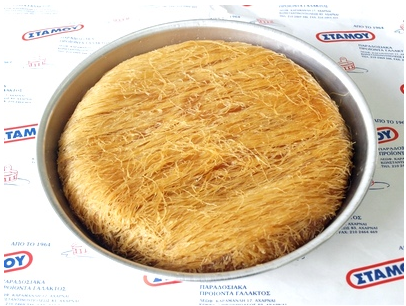
I visited a couple of days ago a Stamou dairy shop in my neighborhood. Stamou is a dairy company established in 1964 and growing ever since. They are mostly known for their milk based desserts and sweets and since they are integrated producers, their products are considered to be very qualitative.
Before checking out in the cashier, a salesperson approached me and said “we would like to inform you that all custard filled pastry (in Greek: γαλακτομπούρεκο) are made today and the ones made yesterday are always in half price discount”. That simple… In a single sentence the salesperson tackled two important issues: freshness of end product and stock management.
Selling is simple, but it is difficult to sell simply.
Most of us have experienced arrogant behaviors from brands or hilarious mistakes in email campaigns. Incidents like these happen quite often and they shock, to a small or larger extent, consumers’ trust to the brands as they evoke a spectrum of negative thoughts and feelings.
I had a positive experience with the www.doctoranytime.gr in two cases where they followed a very professional and efficient approach (both offline and online) to serving my needs as a customer and patient.
One day some weeks ago I received an email from them with regards to my appointment with my gynecologist. Nothing wrong with that really, besides the fact that I am a man…
I didn’t stay to this incident much to judge negatively the company, however I felt a little concerned about how this company uses my address to distribute emails and it crossed my mind to unsubscribe from the mailing list. For some reason I didn’t and to my surprise I received some minutes after the first “gynecologist appointment” email a second one from them… Continue reading “The power of sorry for a quick turnaround”→



 marketlikes