Marketers Strive for More

Those working in marketing are quite familiar with the relentless pursuit of market share, brand awareness, conversion rates, and the list of metrics goes on… Yet, amidst all of these metrics, there are some that are particularly interesting such as the race for claiming association with specific occasions, shapes or even colors.

Let me refer to some familiar examples: Consider the clash of brands competing for association with particular occasions. Kit-Kat claims the “break occasion,” while Coca-Cola stakes its claim on the “meals together occasion.” Then there’s the struggle for dominance in the realm of colors. Mondelez, with its iconic Milka brand, champions the color purple, while Reckitt Benckiser endeavors to be synonymous with pink with their Vanish brand. Lastly there is also the battle for recognition based on shapes. When one thinks of the egg shape, Kinder reigns supreme as the most closely associated brand.

So if you consider the Easter occasion, the imagery of eggs is top of mind… and the egg-shape is traditionally owned by Kinder. What would you do if you were Mondelez, and color purple is your strong asset?

This pursuit of association gave rise to a stroke of genius in packaging.

I noticed this ingenious packaging of Mondelez’s chocolate eggs breaking the clutter in shelves, simply by nesting their chocolate eggs in an iconic purple carton (yes the one that real chicken eggs are sold in). In one shot Mondelez asserted ownership over not just the color purple, but also the iconic egg shape and hence the Easter occasion itself. Great move!

Happy Easter to all the witty people out there!
Marketers Strive for More

A handmade brand story

What is the role of marketing claims when you are purchasing a product? Why are you buying one product vs. another at the decisive moment in front of the shelf?

Marketing claims are there to generate demand for a certain item (or service if you like). However, most importantly, brands would like to provide you with an emotional benefit (through a brand story) coupled with their product, in order to earn your preference. Handmade products are a special category in this, as they try to tell a unique story that’s also greatly connected to the person who actually made the product.

In this frame I particularly liked the below practice from Lush, a cosmetics manufacturer and retailer that make their products using only vegetarian or vegan recipes. I found out that 100% of their products are handmade by people who mix up fresh batches of materials everyday. I got a hold of a Lush product and the package looked quite ordinary at first. Nothing but the claim “handmade” on top of the pack to stress that this product was indeed handmade but… wait a minute… as soon as I flipped the cream container; I noticed a face sticker at the bottom of the package. This is the cartoon version of the person who actually made the product! His name is Dada (!) and his cartoon version looks a bit like me. What a fantastic twist having this kind of visual information on pack. Knowing who made the product and looking at the graphic version of his/her face, gives you a warm feeling and bonds you with the product. This practice conveys a unique story, as soon as this handmade product by a unique individual reaches your hands. In this “uniqueness relay”, the final receiver of the product cannot help but feeling unique and taken care of!

I’m closing with a quote from the company’s website, on why they insist on offering handmade products. This encapsulates their beliefs, constitutes a beautiful brand story and is indeed a very strong element of their USP. “This way, we can ensure that everything we use is of the highest quality and has been ethically sourced from beginning to end. Ever since our humble beginnings, handmade has been a part of our story. It’s not just part of our name; it’s part of who we are.”

Great stuff! What is your brand story that conveys your unique selling proposition?

A handmade brand story

Customers Have the Choice

During the last weeks, the need of masks to protect ourselves from Covid-19 has become immense. I needed to purchase some extra masks, and I did so from an e-shop of a manufacturing firm that favored high customer ratings. Just before completing my purchases, the website successfully proposed some nice looking pair of underwear; I liked them and added them to the basket. Being a man who appreciates experience, what I was experiencing so far in this digital shopping trip was seamless and up to my expectations. The following small twist in the final step before proceeding to check out, gave me an extra warm feeling just like a cherry on top of a cake.

The text next to a tick box read: No packaging: Choose not to include packaging for the underwear, so that packaging can be promptly recycled within our factory premises. Do it for a planet with less waste.

Screenshot from https://www.lord.gr/en/

Some may think that this a camouflaged initiative that aims to avoid packaging cost and to result to lower shipment costs (due to smaller packaging volume). Others would even disagree with the practice and argue that the unboxing experience would be non-existent resulting to a poorer product experience right at its start. I would agree with both statements but let’s take a moment to pause and think it over.

Ticking a box to opt in during an online shopping trip, is a small manifestation of freedom of choice. A person who likes unboxing would not opt in while an eco-sensitive person would. To me, giving the power of choice to the Customer is synonymous to a feel-good gesture for him. I would also add that freedom of choice represents something more important than power; it represents the right of the individual to be a free agent in his relationships with other humans in the society, to choose his own course of action in order to make the right decisions to the benefit of the society. Thinking it over, this does not feel like a cheap trick, but it feels more like a small example of empowerment for a greater, sustainable future.

Customers Have the Choice

Towards a more sustainable and affordable future

Every time I unwrap a luxury item (actually not very often) the amount of packaging waste really blows my mind. The higher the price/volume ratio for a product, the more the packaging waste…

Speaking of this, while shopping in a personal care and beauty shop, I noticed the below “fountain” device from Mugler Fragrances where customers can refill their favorite perfume. It immediately stroke my sensitive ecology chord…

Photo: Mugler Source

A bit of background to the story… as I later read, Mugler perfumes Angel and Alien have been around for quite some time, with Angel launching back in 1992 (yes that is prior to the millennium!!!). It is considered an iconic fragrance as at it was the first “gourmand” fragrance (= a perfume consisting primarily of synthetic edible/gourmand notes, such as honey, chocolate etc.) that shocked the perfume industry with this innovation. Current annual sales estimates of Angel along with its companion scent Alien account for approximately €250 million!

I asked the salesperson about the price difference between purchasing a 50ml bottle or refilling one. The answer came as a surprise to me. Purchasing a bottle would cost ~€73 while refilling one would cost ~€39 (both options were on discount at that moment). This is a great deal of saving for either a loyal customer or a younger, cost conscious person who is relative new to the franchise.

Could it be that solutions like the above, hit two birds with one stone? On one hand with such small actions, Mugler Fragrances show that they care about the environment and on the other hand, that they provide to their customers a more cost efficient way to enjoy the brand (and finally stay in the Mugler franchise).

On a closing note, one thing is certain to me… it takes more than offering a great, even breakthrough at a time, perfume to stay relevant for 28 consecutive years.

Towards a more sustainable and affordable future

On Naming Your (Soap) Product

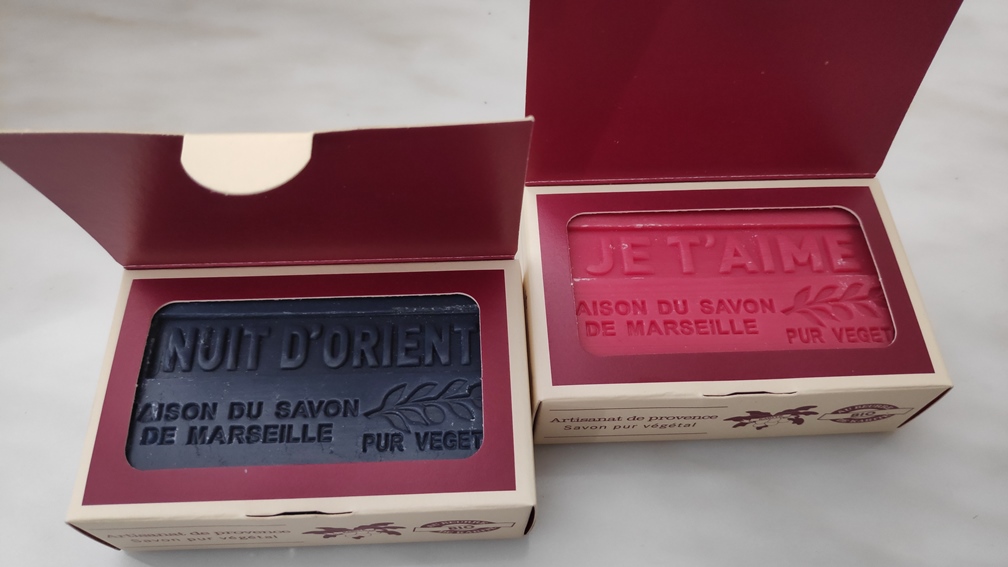
Nowadays, following the outbreak of the Covid-19 virus, we wash our hands several times a day. Since I was looking for a milder alternative for washing my hands, I drew some Marseilles soap bars from the cupboard, which I had purchased from France some time ago.

Marseilles_Soap_Bars

While smelling their scent for picking one of them, I noticed that the names were not descriptive but rather conceptual: Je t’aime, Masculine, Nuit d’Orient.

Amidst negative news on the virus, even while just reading the soap names, I experienced for an instance a warm feeling. I believe it is a great idea, to tie your product name with the feeling you want people to have when using it. Product names should indeed create positive associations and evoke an emotion. Naming your product in the right way, can build a story that affects how customers perceive the value of it.

Stay home, stay safe, stay calm and wash your hands.

On Naming Your (Soap) Product

Tell me what do you see when you look at me

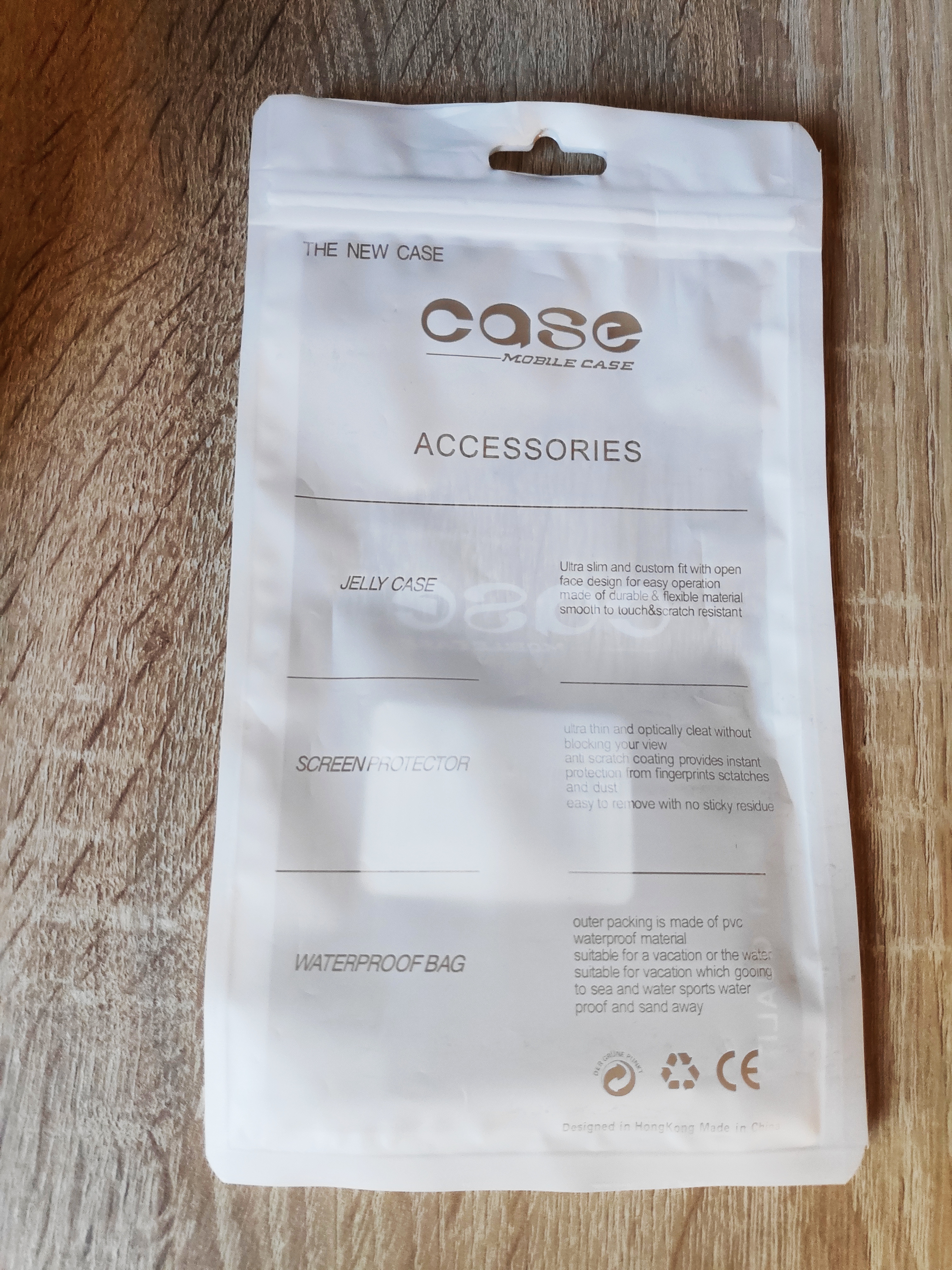
My wife recently bought a case for her new mobile phone. It is a relatively inexpensive, minimal, black plastic mobile phone case. As I was ready to dispose the case’s packaging and since I am obsessed with recycling, I went through the small letters on the packaging to make sure that the case was ok to recycle. We have seen a lot of initiative on minimizing packaging footprint, either by light-weighting packaging, by indicating with clear recyclable signs or even by using compostable containers.

mobile_case

Continue reading “Tell me what do you see when you look at me”

Tell me what do you see when you look at me

Succeeding a 5-Senses Product Experience

Summer is already here and I literally don’t know anyone who doesn’t enjoy ice cream. Thinking about ice cream category communication you can argue that most of the time it is all about indulgence. You usually see ads with melting caramel close ups, mouthwatering slow motion pack shots and cracking chocolate sound effects to generate the impulse and the crave for ice cream.

As all of this takes place in the wonderful world of advertising, what happens in real life? Ice cream surely looks great, smells great and tastes great in real life, but is this what the whole product experience should be about? Could we involve all 5 senses in the tasting of a product? Continue reading “Succeeding a 5-Senses Product Experience”

Succeeding a 5-Senses Product Experience

Designing for impact and differentiation

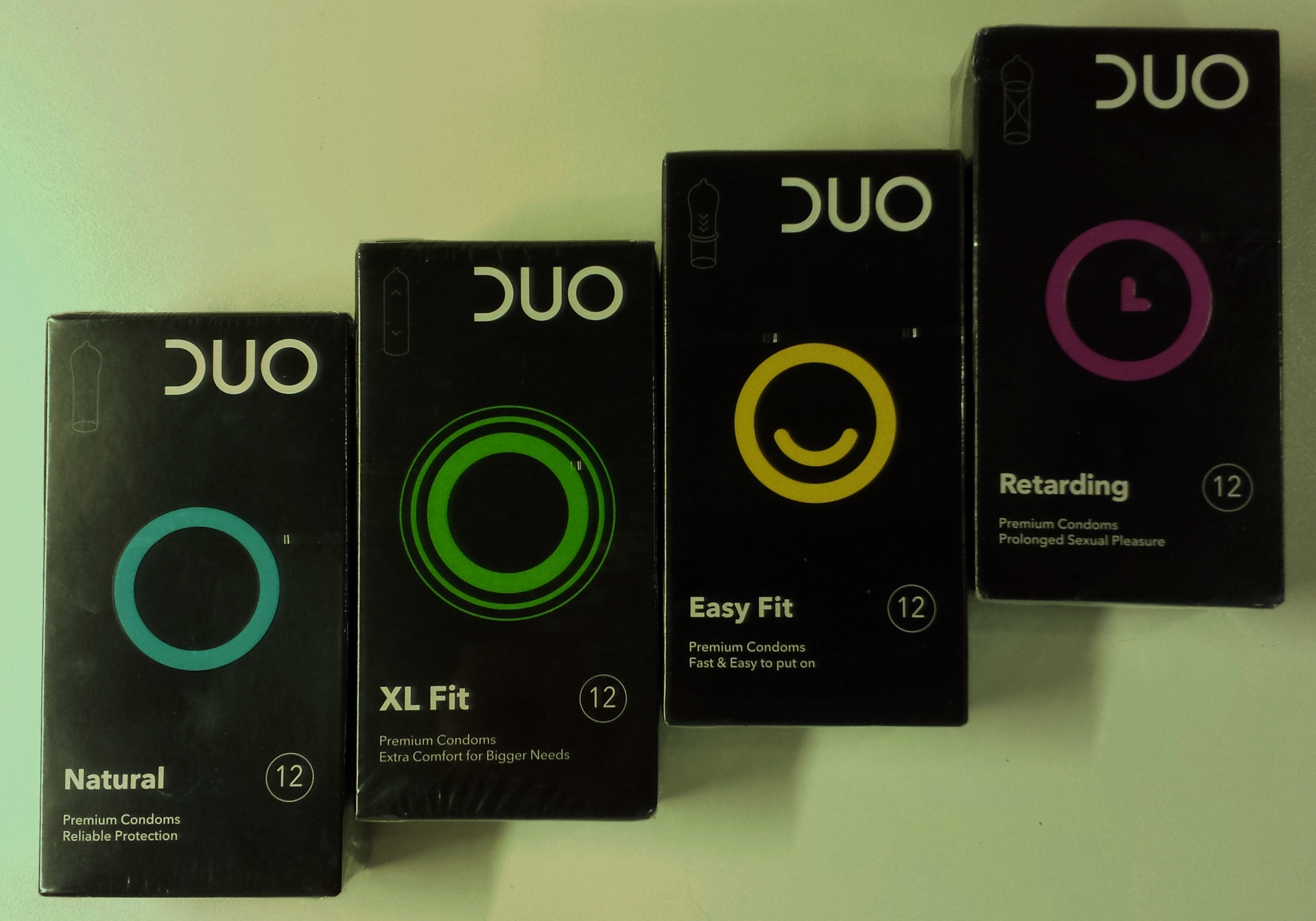
I recently observed the new design for DUO condoms series while waiting in line at a kiosk. I was impressed that the design was so powerful that stood out even in the very cluttered environment of a Greek kiosk.

DUO series

The design appealed to me and I believe it broke the clutter and differentiated from the competition for three bold reasons: Continue reading “Designing for impact and differentiation”

Designing for impact and differentiation

How do effective win-to-win partnerships look like

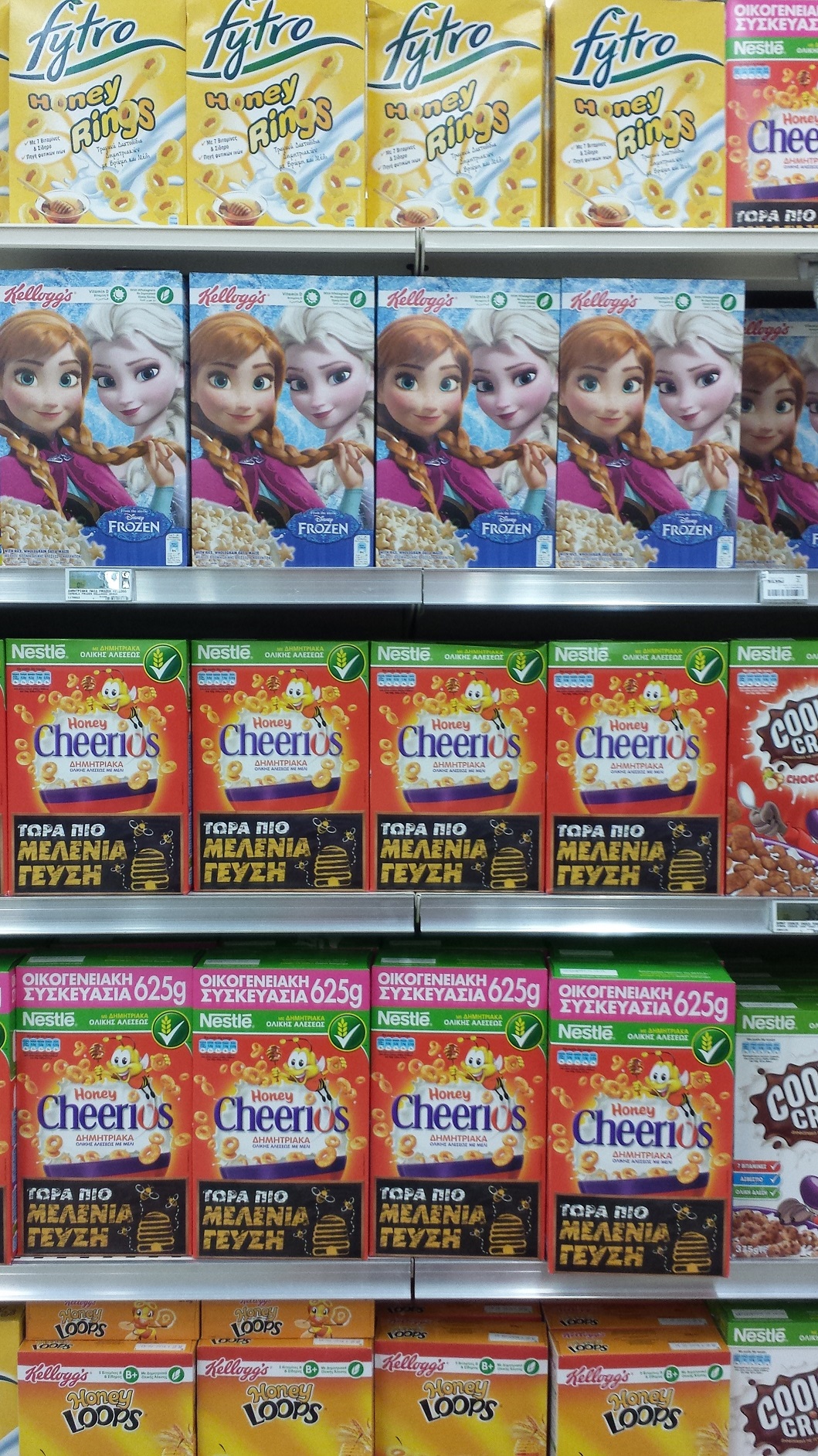
I keep a close eye in the breakfast cereals market since the early 2000s, when breakfast cereals were relatively underdeveloped as a category in Greece. Together with the growth of pasteurized / “fresh” milk, breakfast cereals grew vastly during the last decade riding on the global health & wellness trend in the food industry.

The category itself has a lot of great characteristics on shelf. The 3 things I particularly like in this category is that there is a pretty clear segmentation (kids / teens / family / muesli / adult / functional), there is room for innovation and experimentation (possibly the only way to differentiate in a category that would otherwise have been a commodity) and lastly there is plenty of available facing space to communicate on pack.

Frozen Cereals Final

Continue reading “How do effective win-to-win partnerships look like”

How do effective win-to-win partnerships look like